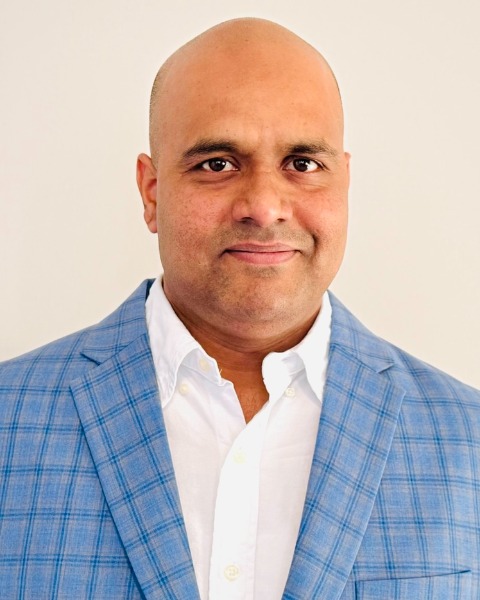
Associate Director Eurofins Clinical Trial Solutions Lenexa, Kansas
This 30-minute session will focus on the analytical validation of a Whole Exome Sequencing (WES) assay designed for biomarker discovery and clinical development. WES enables comprehensive analysis of protein-coding regions, which harbor most clinically relevant variants, making it a powerful tool for precision medicine. However, implementing WES in regulated environments requires rigorous validation to ensure accuracy, reproducibility, and robustness—areas where many pharmaceutical scientists lack practical guidance. The presentation will begin with an overview of WES technology and its role in translational research and drug development. Next, it will detail the validation strategy applied to saliva, buccal swab, and whole blood matrices, highlighting the importance of flexible sample collection for clinical trials. Key performance characteristics will be discussed, including sensitivity, specificity, positive predictive value (PPV), limit of detection (LOD), precision, stability, and matrix equivalency. Attendees will learn how DNA extraction was automated using the MagMAX DNA Multi-Sample Ultra 2.0 Kit on KingFisher Flex, followed by library preparation with Twist Bioscience kits and sequencing on Illumina NovaSeq. The session will also cover bioinformatics analysis using an internally developed pipeline on Illumina Connected Analytics, emphasizing quality control and variant calling accuracy. Real-world validation results will be presented, demonstrating >99% sensitivity for SNVs, >95% for indels, and >98% matrix equivalency across sample types. Practical considerations for assay deployment, including stability under various storage conditions and reproducibility across operators and runs, will be highlighted. Finally, the talk will showcase how this validated WES assay was successfully applied in two drug discovery phases, illustrating its utility in early-stage research and its potential for clinical trial stratification. The session will conclude with actionable recommendations for integrating WES into biomarker-driven development programs, bridging the gap between research-grade sequencing and clinically validated workflows. This presentation is designed as a standalone session but could also serve as part of a larger symposium on precision medicine and biomarker analytics.
Learning Objectives:
Describe the analytical validation process for Whole Exome Sequencing (WES) assays, including key performance metrics such as sensitivity, specificity, and limit of detection.
Explain strategies for ensuring assay robustness and reproducibility across multiple sample types (saliva, buccal swab, and whole blood) and storage conditions
Identify practical considerations for integrating validated WES workflows into biomarker discovery and clinical trial stratification within precision medicine programs.